Brazil is one of the most competitive countries in the world regarding its natural resources (WEF, 2019), and this wealth is largely found within the limits of Conservation Units throughout the country. The history of protected areas in Brazil began in 1934, when the Constitution started to regard nature as a national heritage to be preserved. Furthermore, the Forest Code of the same year established the first legal criteria for the protection of ecosystems, culminating in 1937 with the creation of the first Brazilian Conservation Unit, the Itatiaia National Park in the Atlantic Forest of Rio de Janeiro (MEDEIROS, 2004). Since then, many other units from different management categories have been created throughout the territory and in different biomes, making this one of the main national strategies to ensure the conservation of nature, especially in areas with a high risk of disappearing.
In the Atlantic Forest Great Reserve, the first Conservation Unit created was the Alto Ribeira Tourist State Park (PETAR) in 1958, followed by the Cardoso Island State Park four years later. In the Paraná portion, the first unit was the Lauraceae State Park in 1979, where the first federal unit was also created, the Guaraqueçaba Ecological Station, in 1982. At this moment, a large part of the Atlantic Forest had already been devastated throughout Brazil after decades of extractive exploitation (DEAN, 1996). Remnants like this have become increasingly rare throughout the country, and their importance for the conservation of nature motivated the creation of an extensive mosaic of protected areas of various categories across this territory in the following decades, especially from the 2000s with the establishment of the National System of Conservation Units (SNUC).
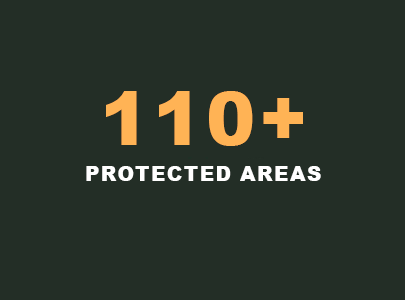
Around the world, countries with distinct characteristics and resources have their own tools for the protection of natural heritage; however, the creation of protected areas is one of the main strategies adopted for this purpose. In Brazil, the National System of Conservation Units (SNUC), established in the year 2000 by Law No. 9,985, is responsible for establishing criteria and standards for the creation, implementation, and management of the Conservation Units.
There are twelve main categories with different objectives and characteristics, most of which already exist within the territory of the Atlantic Forest Great Reserve. Conservation Units can be created at various jurisdictional levels: at the national level, where the responsible agency is the Chico Mendes Institute for Biodiversity Conservation (ICMBio); at the state level, these are the responsibility of the environmental agencies, in the present case, the Instituto do Meio Ambiente (IMA-SC), the Instituto Água e Terra (IAT-PR), and the Fundação Florestal (FF-SP); at the municipal level, this responsibility falls to the respective municipality’s Secretariat of Environment.
These categories are divided into two groups:
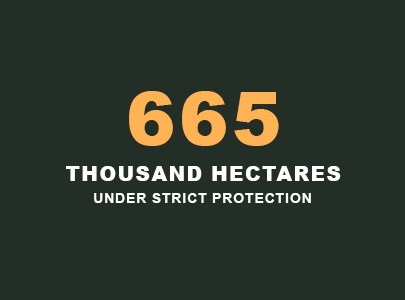
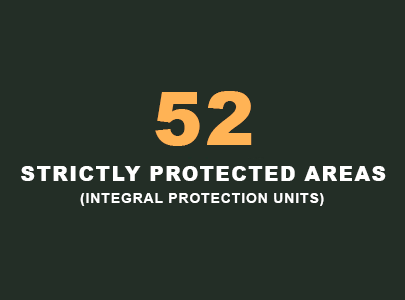
• Strict Protection Units: Their main objective is the protection and conservation of nature, allowing only the indirect use of natural resources. In these areas, there can be no human occupation and, in the case of Biological Reserves and Ecological Stations, visitation is not allowed;
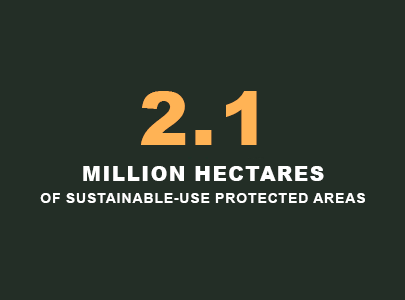
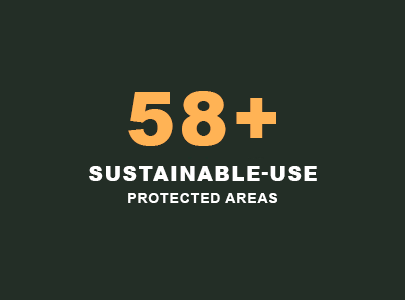
• Sustainable Use Units: They reconcile the use and management of a portion of their natural resources with nature conservation. Many traditional populations live in these areas, with the exception of the Private Natural Heritage Reserve (RPPN), which is classified as sustainable use, but is privately owned.