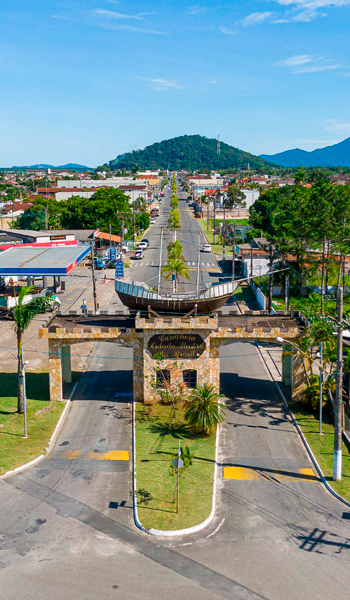
In Tupi-Guarani, Guaraqueçaba means “Place of the Scarlet Ibis” (Guará), a bright red bird that was once abundant in the region but is now nearly extinct. The colonization of the area began with the arrival of the Portuguese in Paraná around 1545. Around 1638, Gabriel de Lara, the founder of the captaincy of Paranaguá, discovered a rich gold deposit on the slopes of Serra Negra. Following this discovery, miners and adventurers arrived to explore the rivers, panning for gold in various locations. Shortly thereafter, with the arrival of the Jesuits—who founded an agricultural and religious establishment in Superagui—the region’s first human settlement was built.
It was only in the 19th century, when Cipriano Custódio de Araújo and José Fernandes Correia built a chapel on Quitumbê Hill, that the first buildings began to appear around it, quickly forming a village. This village was elevated to a parish in 1854 and to a municipality in 1880, later being annexed to Paranaguá as a mere district. In 1947, its autonomy was restored, and the municipality was re-established.