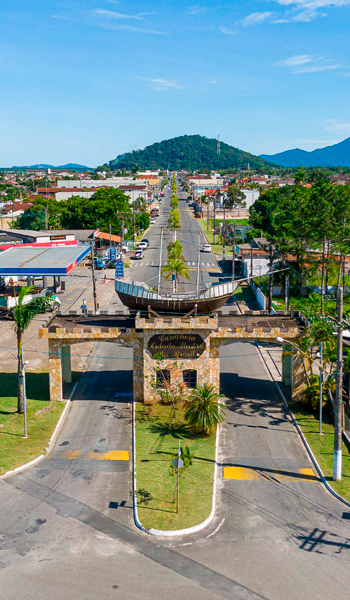
In 1666, the settlement of Campina Grande emerged. It was a small region that belonged to the Municipality of Arraial Queimado (now Bocaiúva do Sul). In 1873, the parish (freguesia—the name given to a settlement once a priest was present) of Campina Grande was created, under the invocation of Saint John the Baptist. In 1883, the parish of Campina Grande was elevated to the category of a town (vila—the location of the municipal government headquarters), separating from the municipality of Arraial Queimado. On March 22, 1884, the Municipal Council of the Town of Campina Grande was installed, and the first councilors were elected. In 1892, the first mayor, Lieutenant José Eurípedes Gonçalves, was elected.
In 1939, the Municipality of Campina Grande was dissolved, and the region became a district, split between Piraquara and Bocaiúva do Sul. In 1943, by Law No. 199 of December 30, the name Campina Grande was changed to Timbú, remaining a district of the municipality of Piraquara. Starting in 1951, with Law No. 790, the region regained its status as a municipality, still under the name Timbú. Finally, in 1956, following a demand from the population, the municipality was renamed Campina Grande do Sul.