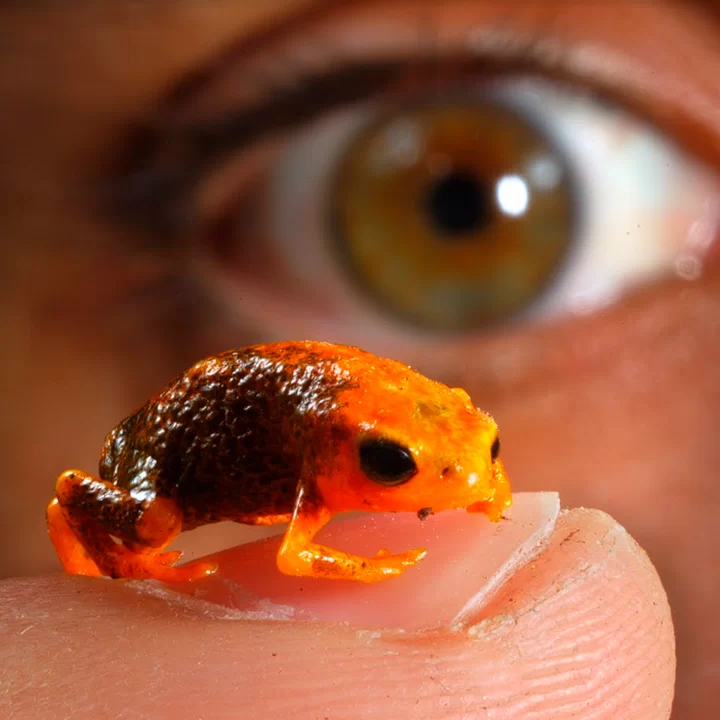
Among amphibians, the forests of the region are famous for harboring several endemic species of small, colorful frogs of the genus Brachycephalus. These frogs use the region’s mountaintops as evolutionary islands, similar to a Brazilian Galápagos Archipelago. However, various other amphibians share the numerous regions with different reproductive strategies. The glass frog (Hyalinobatrachium uranoscopum), for example, lays its eggs on broad leaves of vegetation along stream banks; upon hatching, the tadpoles fall directly into the water. In turn, the fissile marsupial frog (Flectonotus fissilis), in which the female carries the eggs on her back, and the tadpoles are laid in bromeliads.
Among reptile species, some are well-known for their wide occurrence, such as the jararaca pit viper (Bothrops jararaca) or the tegu lizard (Tupinambis sp.). Rare species are also found, such as the Cropan’s boa or Ribeira boa (Corallus cropanii), which is endemic to the Atlantic Forest of São Paulo and listed as “endangered”.
As is typical of Neotropical forests, the Atlantic Forest stands out for its variety of birds. It hosts exuberant specimens, such as the seven-colored tanager (Tangara seledon), and species of toucans (Ramphastos sp.). Furthermore, it is home to the entire world population of the endemic and endangered red-tailed amazon (Amazona brasiliensis). It also shelters some flocks of the vinaceous-breasted amazon (Amazona vinacea), a globally threatened species. Among birds of prey, the local forests are used by three varieties of hawk-eagles (Spizaetus sp.), while the rare rufous-crab hawk (Buteogallus aequinoctialis) flies through the mangroves. Unfortunately, not all original native birds are seen today, the presence of the harpy eagle (Harpia harpyja) has not been reported in the region for many years.
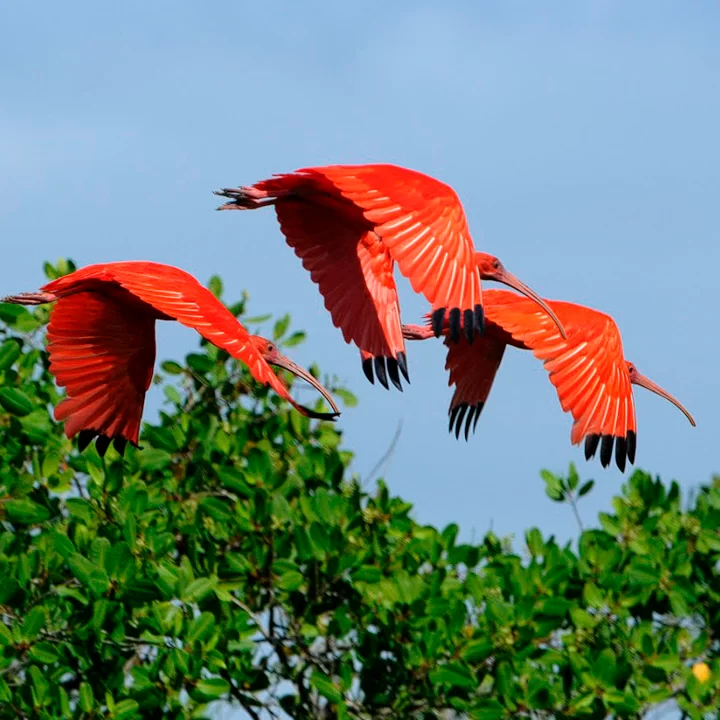
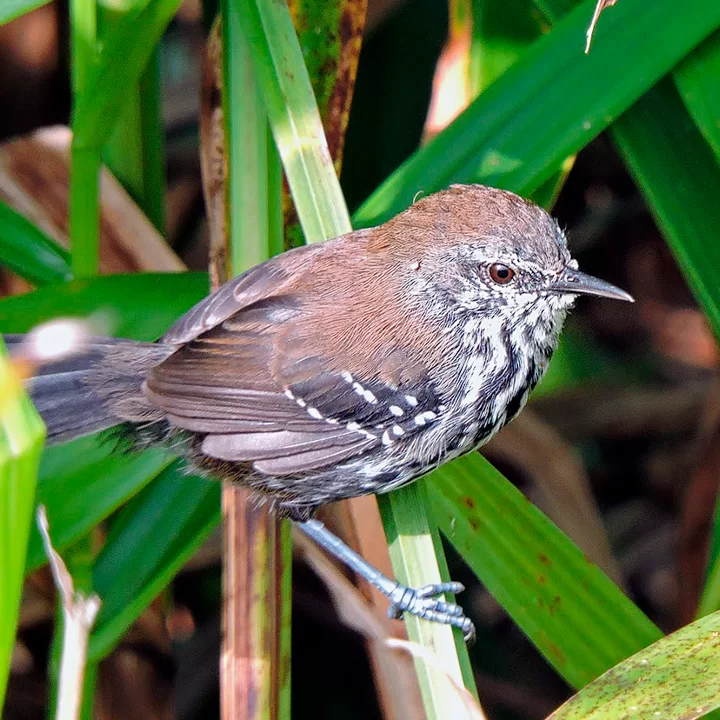
In the coastal wetlands, we find the colorful scarlet ibises (Eudocimus ruber), accompanied by cormorants (Nannopterum brasilianus),boobies (Sula sp.), and the magnificent frigatebird (Fregata magnificens). The lowland and wetland regions also feature peculiar species, such as the endemic and endangered marsh antwren (Formicivora acutirostris), which inhabits only the marshy areas and vegetation bordering the lowland rivers.
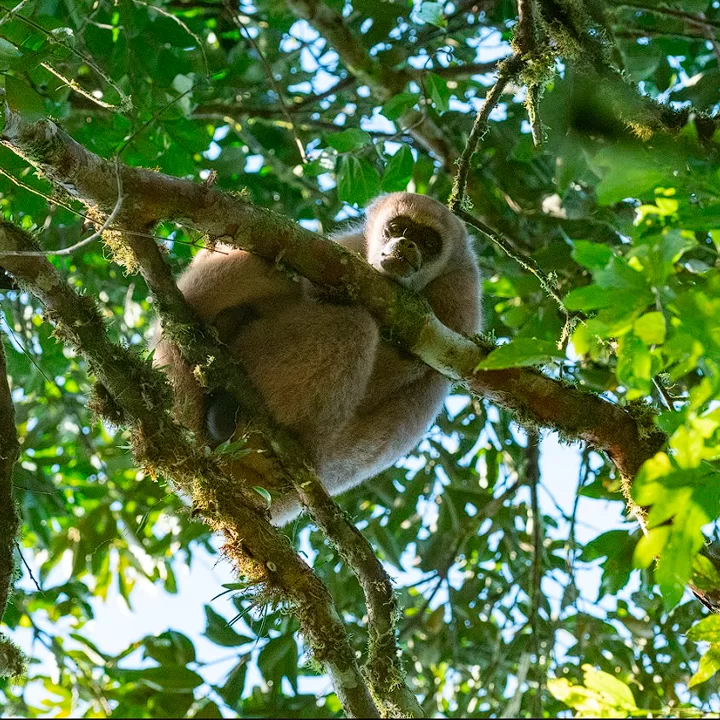
Regarding mammals, the area also stands out for conserving the largest population of the southern muriqui (Brachyteles arachnoides) and two species of endangered lion tamarins—a small population of the black lion tamarin (Leontopithecus chrysopygus) and the entire population of the superagui lion tamarin (or black-faced lion tamarin, Leontopithecus caissara).
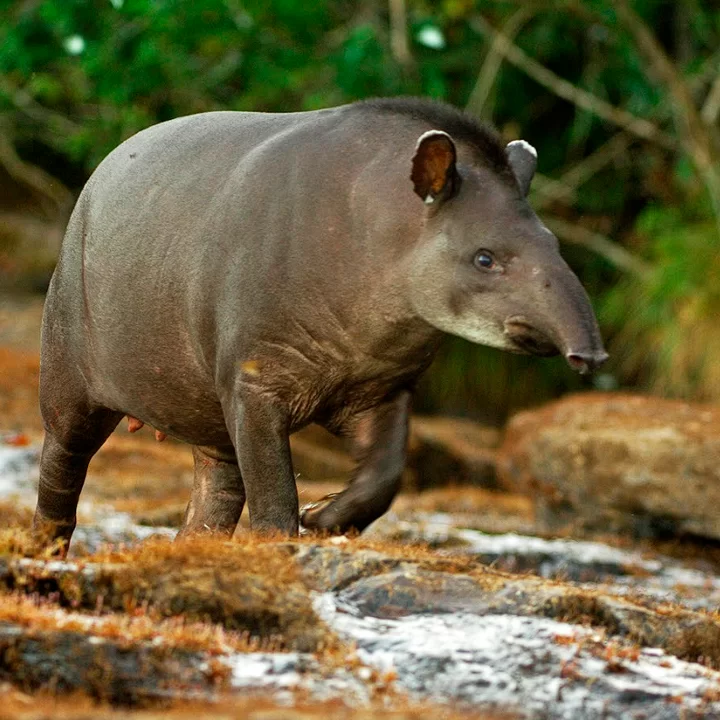
The area maintains healthy populations of large herbivores susceptible to hunting, such as tapirs (Tapirus terrestris) and white-lipped peccaries (Tayassu pecari).They are accompanied by large herbivores like deer (Mazama sp.), collared peccaries (Pecari tajacu), and pacas (Agouti paca). Among the large mammals, there is the significant presence of predators such as the ocelot (Leopardus pardalis), the cougar, also known as the puma (Puma concolor),the bush dog (Speothos venaticus), and the imposing jaguar (Panthera onca).
The local coast is inhabited by giant manta rays (Manta birostris) and Atlantic goliath groupers (Epinephelus itajara), which can exceed 400 kg and find shelter in the reefs protected by oceanic islands. The estuary and bay regions are used by sea turtles, such as the green sea turtle (Chelonia mydas), for resting and feeding. In this coastal region, it is easy to spot the Guiana dolphin (Sotalia guianensis). And, in Babitonga Bay, in Santa Catarina, we have the world’s only opportunity to sight a resident population of a rare dolphin species, the franciscana (Pontoporia blainvillei).