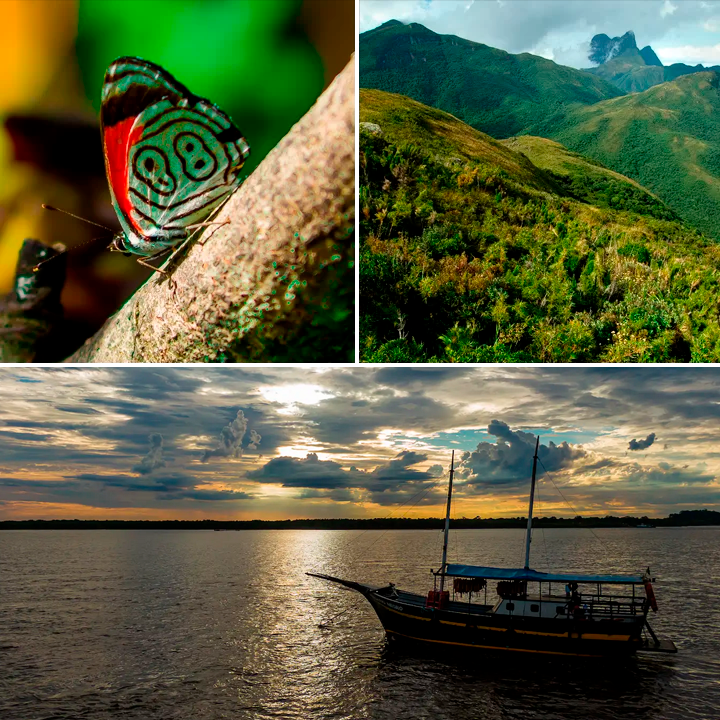
The Atlantic Forest Great Reserve is home to an incredible diversity of landscapes and their associated ecosystems. It is important to take into account the factors that have allowed this region to remain preserved while most of this biome was systematically replaced by other land uses. First, it is important to note that the Atlantic Forest Great Reserve follows a long stretch of the Serra do Mar. This rugged topography made the removal of vegetation unfeasible, allowing many wildlife species—lost in other regions—to persist here. Additionally, BR-101, the federal highway that runs along much of Brazil’s coastline from north to south, does not cross this section, instead bypassing it further inland. The existence of busy highways is directly related to the degradation of ecosystems around the world, either due to the increase in real estate speculation or due to easy access for the extraction of natural resources. This particular highway has had a significant impact on the Atlantic Forest. The combination of these factors has also led to the absence of large urban centers in this territory, with most cities relying heavily on tourism as an important source of income for the population.
Crucially, many people worked tirelessly to create an extensive mosaic of protected areas, which today ensures the protection of most of the Great Reserve’s territory. In addition, the Atlantic Forest Law of 2006—achieved after more than a decade of efforts—provides special legal protection for the entire biome, including this region.
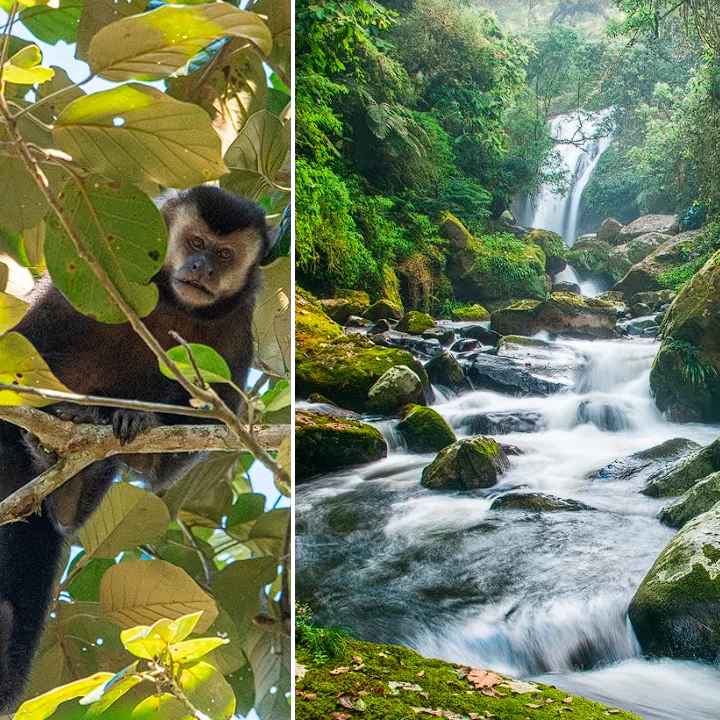
Within this vast continuous expanse of native vegetation, significant portions of the biome’s landscapes remain in good conservation status. This is due to its distribution, which begins at the coast, passes through bays, mangroves, and coastal plains, crosses the rugged terrain of the Serra do Mar, and reaches its western limit in remnants of Araucaria Forests. This characteristic ensures the presence of a wide diversity of species, as well as distinctly different landscapes located in close proximity to one another.
Welcome to the largest continuous remnant of Atlantic Forest on the planet