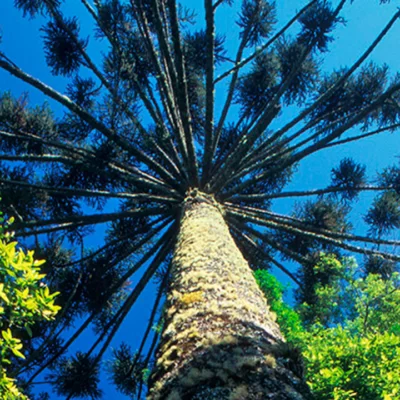
The Atlantic Forest Great Reserve shelters remnants of an ecosystem that is emblematic of southern Brazil: forests dominated by prehistoric Araucaria trees, which were already present during the Jurassic period more than 200 million years ago. This vegetation formation is well adapted to cold climates with frequent frosts and shares the landscape with natural grasslands and rocky outcrops. Araucaria forests are among the most threatened ecosystems within the Atlantic Forest and represent the primary habitat of the endangered vinaceous-breasted amazon (Amazona vinacea).
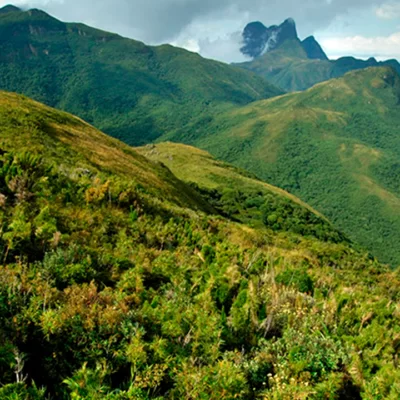
ALTITUDE GRASSLANDS AND CLOUD FORESTS
These environments are typical of the mountaintops of the Serra do Mar. Harsh physical conditions such as high altitude, low temperatures, and strong winds prevent the establishment of forests, but it would be a mistake to assume that this limits local nature. On the contrary, these conditions support a high diversity of grasses and small trees, many of which are endemic to these habitats. Breathtaking views await hikers and climbers who venture into these landscapes.
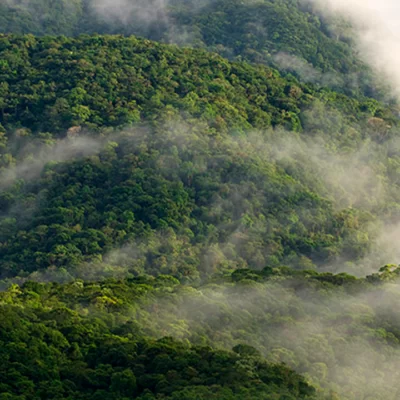
MOUNTAIN FOREST
Just below the previously mentioned habitats, the combination of milder temperatures, weaker winds, and high humidity gives rise to these intriguing forests, where medium-sized trees are covered with epiphytes such as orchids and bromeliads. These forests are home to tiny, colorful endemic frogs of the genus Brachycephalus and serve as vital water sources for millions of people.
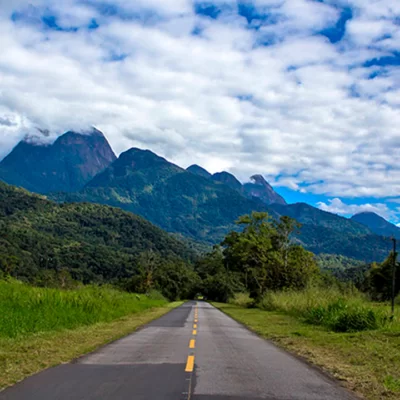
SLOPE AND LOWLAND FOREST
Below 800 meters, where slopes become less steep, the combination of fertile soils and high rainfall allows the establishment of an impressive assemblage of large trees that supports one of the most biodiverse habitats on the planet. These lowland forests are as striking and spectacular as those of the Amazon and even show higher concentrations of large mammals and birds.
RIVERS AND WATERFALLS
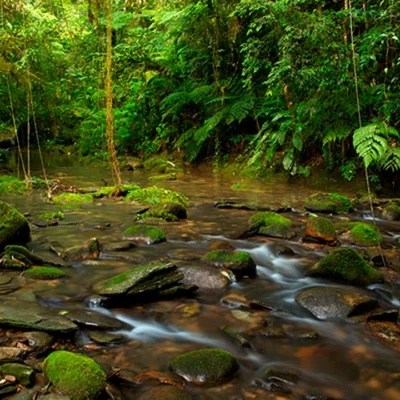
The Atlantic Forest Great Reserve is home to countless rivers, pools, waterfalls, and cascades that wind through the forest, bringing life, movement, and freshness to the landscape. They provide settings for water-based recreational activities such as swimming, rafting, and kayaking. Clear and abundant water throughout the year is ensured by the forest that protects these waterways and maintains the quality needed to supply the region’s cities.
SWAMPS, MARSHES, AND LAKES
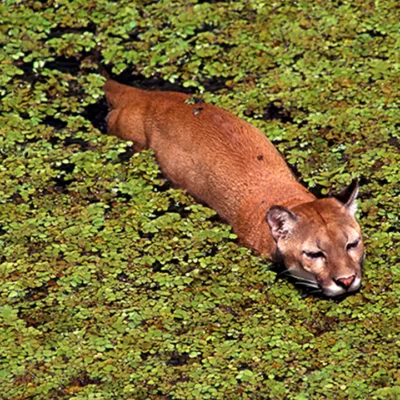
Where flowing waters slow down, numerous marshes and lagoons form around rivers and springs. These are priority areas for conservation, hosting a wide variety of amphibians and reptiles. In addition, one of these habitats shelters the only known population of the marsh antwren (Formicivora acutirostris), an endangered species. These wetlands are essential to the water cycle, functioning as reservoirs and natural purification systems.
BAYS AND MANGROVES
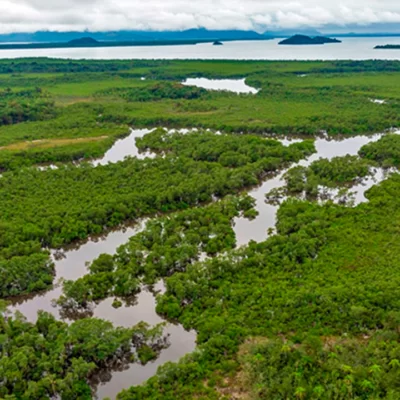
This region is home to several large estuarine bays, where the abundant freshwater produced in the forests meets the salty waters of the ocean. This is the realm of mangroves made up of resilient trees whose roots are adapted to tides and high salinity. The combination of nutrients and shelter makes mangroves a highly productive ecosystem and an essential nursery for marine life. A boat trip through these vast, wild bays is an unforgettable experience, filled with sightings of scarlet ibises, dolphin species, and red-tailed amazons.
RESTINGA, DUNES AND BEACHES
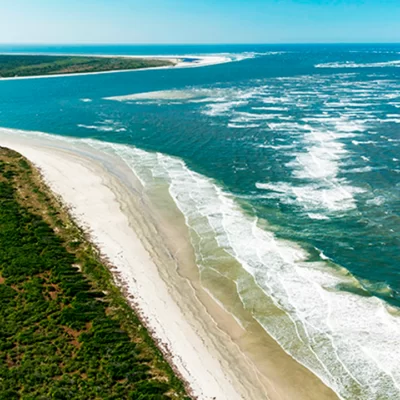
Restingas are coastal forests that grow on sandy soils under strong maritime influence. They are among the most threatened ecosystems due to intense pressure from urban and infrastructure development. The transition zone between restingas and lowland forests serves as habitat for the endemic black-faced lion tamarin (Leontopithecus caissara). Dune areas along the coast create dynamic environments that are important for native species and also provide recreational spaces for people. The region is home to outstanding beaches for visitors to enjoy, which also serve as nesting sites for green sea turtles (Chelonia mydas).
OCEAN AN ISLANDS
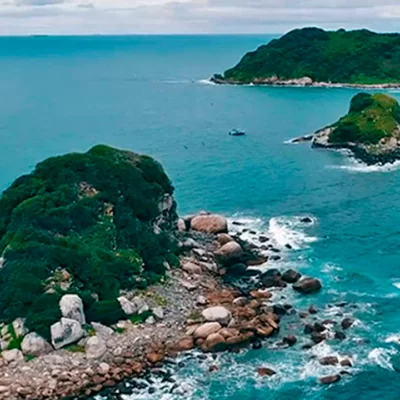
In this region, the Atlantic Ocean reveals one of its richest portions. The large number of estuaries and bays ensures abundant marine life, including rare species, and also offers opportunities for diving and sport fishing. The Atlantic Forest Great Reserve includes the marine platform down to depths of 50 meters, along with all its ecosystems and archipelagos.