In less than 20 years, natural areas located in the Great Atlantic Forest Reserve have already allocated almost R$40 million for public services in a municipality in Paraná.
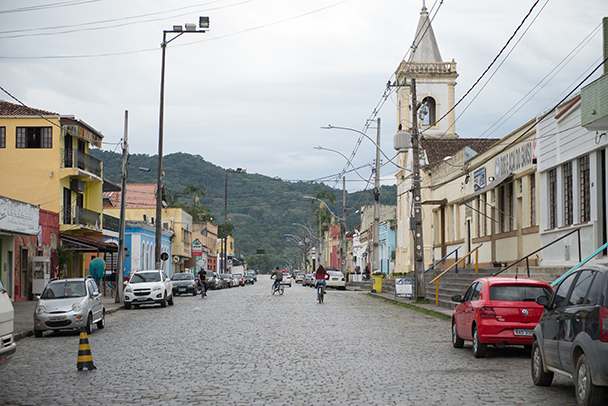
In 17 years, between 2005 and 2022, the municipality of Antonina, located on the coast of Paraná, has already received nearly R$40 million in Ecological ICMS resources from two SPVS (Wildlife Research and Environmental Education Society) Natural Reserves to be directed primarily to the municipality’s health and education sectors. By law, at least 25% of the total revenue must be allocated to education and 15% to health.
The SPVS Natural Reserve in Antonina that generates the most Ecological ICMS revenue for the municipality is the Guaricica Natural Reserve, due to its size: almost nine thousand hectares – the equivalent of more than nine thousand soccer fields. Through 2022, R$27,524,408.63 had been collected thanks to its existence and the quality management applied by SPVS. The Águas Natural Reserve, with over three thousand hectares, allocated R$9,737,089.67 to the city government. The combined total is R$37,261,498.30. Of the R$73 million Antonina received during this period from the state of Paraná due to its well-preserved natural areas, almost 52% of the total came from two SPVS Natural Reserves. The calculation takes into account values reported by the IAT, the Water and Land Institute, of the Paraná government. All areas are located in the territory comprised of the Great Atlantic Forest Reserve.
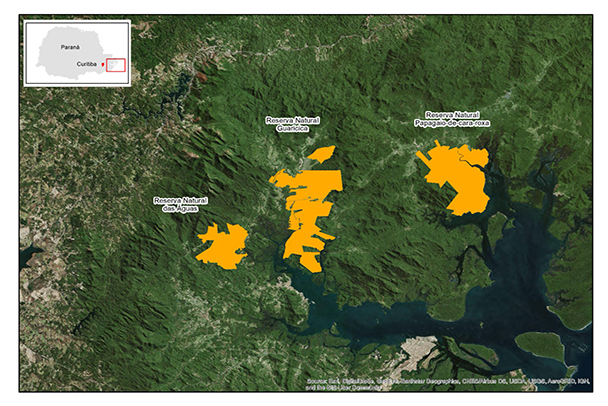 SPVS Natural Reserves
The Ecological ICMS is a financial mechanism that allows municipalities to access larger portions than they are already entitled to from the financial resources collected by the states through the Tax on Circulation of Goods and Services (ICMS), based on meeting certain environmental criteria established in state laws. Ecological ICMS revenue reflects the level of economic activity in municipalities, combined with the conservation and preservation of biodiversity. Paraná was the first Brazilian state to institute the Ecological ICMS, in 1989.
With the creation of the SPVS Natural Reserves in the late 1990s in Antonina and Guaraqueçaba, the institution acquired more than 19,000 hectares of Atlantic Forest. These reserves are located in the heart of the Great Atlantic Forest Reserve, a portion of the biome covering nearly three million hectares that extends along a crucial ecological corridor for biodiversity conservation between the states of Paraná, Santa Catarina, and São Paulo.
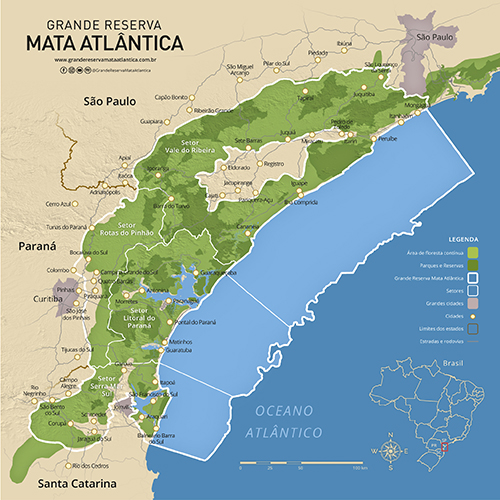 Great Atlantic Rainforest Reserve
Ao longo desses anos um amplo processo de restauração vem sendo implementado e as áreas submetidas a diversas ações de proteção, viabilização de pesquisas e atividades de uso público. A Reserva Natural Guaricica e a Reserva Natural das Águas, ambas em Antonina, e Reserva Natural do Papagaio-de-cara-roxa, em Guaraqueçaba) são hoje mantidas pela SPVS. Os recursos vieram de três multinacionais norte-americanas (General Motors, American Electric Power e Chevron) que, na época, buscavam investir em ações de conservação em um país da América Latina para compensar parte das emissões geradas pela atuação dos negócios que conduziam. A SPVS participou de uma concorrência na ocasião e foi selecionada para receber e gerenciar os recursos para a criação e a manutenção das reservas, que são de sua propriedade.
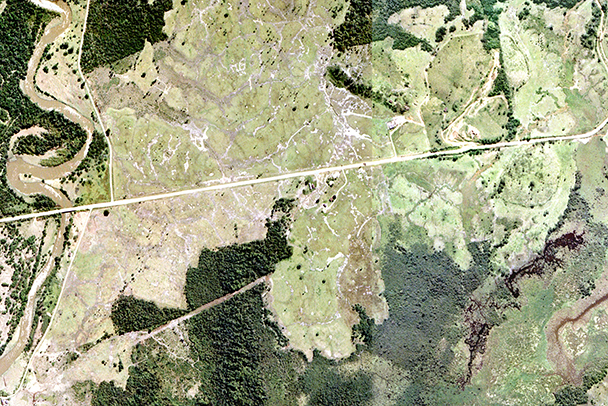 Guaricica Restoration in 2000
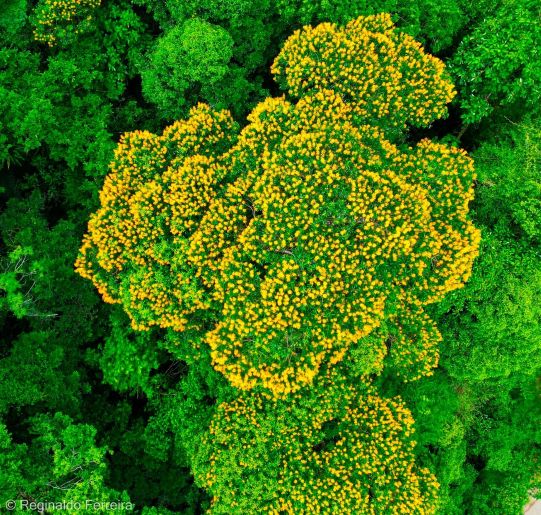
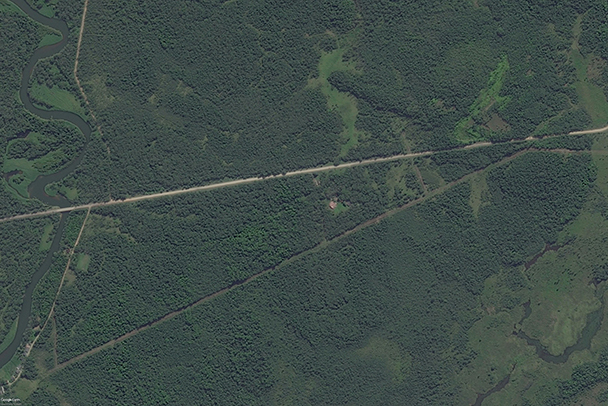 Guaricica Restoration in 2020
Shortly thereafter, the areas became RPPNs (Private Natural Heritage Reserves) to ensure their protection in perpetuity. An RPPN is a privately owned, perpetual conservation unit, intended to preserve nature without expropriation or alteration of property use rights. With the creation of the reserves, Antonina began to generate even more Ecological ICMS tax revenue.
The municipality’s mayor, José Paulo Vieira Azim, recognizes the importance of the reserves for tax collection and improving the population’s quality of life. “Perhaps at the time, the companies that facilitated the purchase of the lands aimed exclusively at promoting specific environmental responsibility initiatives, but when we consider the amount of Ecological ICMS transfers to Antonina, for example, over the years since the creation of the RPPNs, we realize that the fruits of the investment go far beyond the environmental impact, as the value contributed has returned to society through resources that enable and promote, to this day and increasingly, positive actions for the community as a whole,” he says.
For Clóvis Borges, executive director of SPVS, the work carried out by SPVS, with support from the public and private sectors, with the establishment of three Nature Reserves and other important actions aimed at nature conservation in the Great Atlantic Forest Reserve, represents a concrete example for other similar initiatives to be carried out throughout the country. “We start from the evidence that well-preserved natural areas produce nature, in the form of numerous indispensable services, such as water supply, soil protection, landscape maintenance, among many others. They also open up opportunities for job and income generation. Therefore, conservation must be considered by all of society as part of business and recognized as an asset of inestimable value that we cannot afford to forgo,” argues Borges.
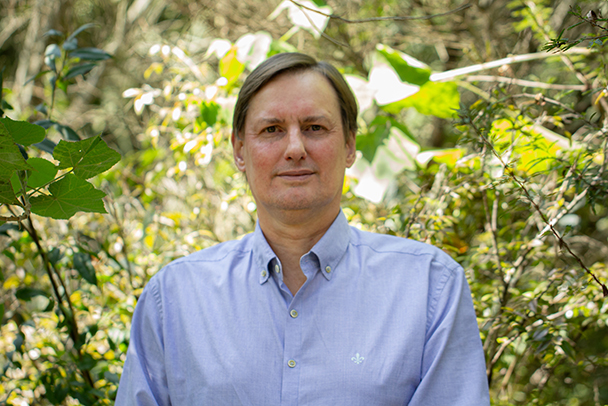 Clóvis Borges. Photo: SPVS Disclosure
New law encourages the creation of more Nature Reserves
Aware of the importance of resources for improving public services to the population, under the management of Mayor Zé Paulo, new legislation was created in Antonina that allows Payment for Environmental Services – the so-called PSAs – to owners who maintain or create new Conservation Units (UCs) in the municipality.
The Municipal Payment for Environmental Services Law (PSAM) (No. 37/2020) came into effect in 2023 and aims to financially compensate landowners who create Private Natural Heritage Reserves (RPPNs) on their properties, promoting the generation and maintenance of ecosystem services. “The initiative, in addition to contributing to this universal agenda of nature conservation and production, also contributes to the specific and urgent agendas that a community demands in various areas to realize the fundamental rights of citizens,” says the mayor.
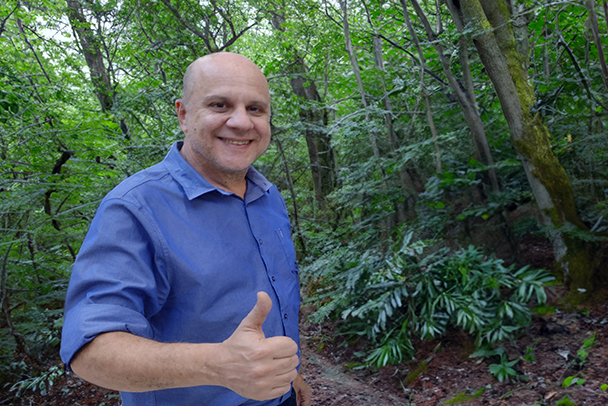 João Paulo Vieira Azim. Photo: Antonina City Hall
“We hope that this initiative will inspire other municipalities and Brazilian states, and that the evaluations of Conservation Units will consider criteria that allow for the rewarding, promotion, and encouragement of the creation of Private Natural Heritage Reserves (RPPNs) in areas that will truly contribute to biodiversity conservation. The new law is expected to ensure that those involved will effectively contribute fully to nature conservation and the protection of life on Earth,” he concludes.
Report: Claudia Guadagnin