The conservation of nature, in Brazil and worldwide, can no longer rely solely on specialists, environmental institutions, and protective legislation. If we want to ensure the future of our biomes and the life that inhabits them — including human life — it is necessary to involve the entire society. And this starts with education, especially of young people.
The conservation of nature, in Brazil and worldwide, can no longer rely solely on specialists, environmental institutions, and protective legislation. If we want to ensure the future of our biomes and the life that inhabits them — including human life — it is necessary to involve the entire society. And this starts with education, especially of young people.
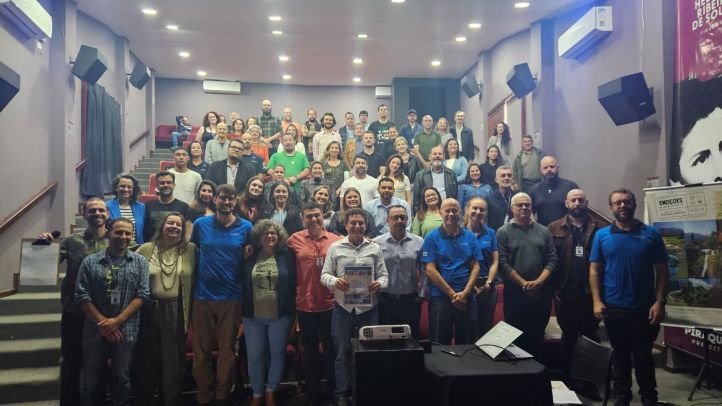
The partnership is the result of a dialogue that began back in 2021, encouraged by the Spanish biologist and conservationist Ignacio Jiménez Pérez, author of the book Nature Production: Parks, Rewilding, and Local Development. At the time, GNF was interested in SPVS’s work in the Greater Atlantic Forest Reserve territory and in the transformative potential of the educational project we had been developing. After two years of planning, the proposal was approved by the German government in the second half of 2024, and since the beginning of this year, it has officially been put into action.
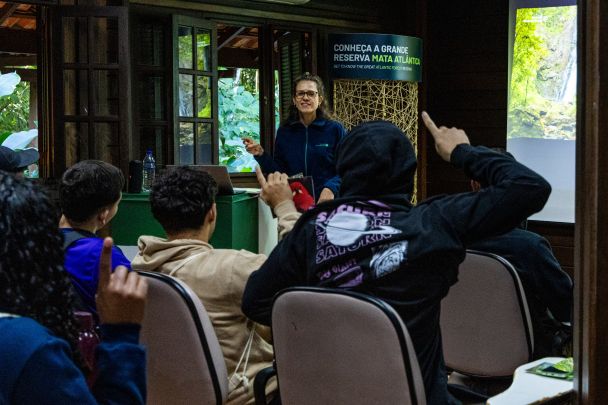
Based on a model of participatory and territorialized environmental education, the new phase of the School foresees the direct training of 60 young people, 100 teachers, and 50 entrepreneurs in the municipalities of Morretes, Antonina, and Guaraqueçaba (PR), with indirect impacts estimated to reach at least 460 people by January 2026. The project stems from a fundamental understanding: protecting the Atlantic Forest requires genuine engagement from the communities living in this territory.
Education as a starting point
Founded in 2017, the School of Nature Conservation is a traveling project that aims to raise awareness, inform, and equip students about the importance of biodiversity and the opportunities that arise from the relationship between conservation and local development.
The initiative is grounded in practical experiences: trails in conservation units, workshops with researchers, debates on sustainability, and immersions that involve the history, culture, and way of life of local populations. Participants are young people aged 15 to 18, students from public schools selected based on their proximity to natural areas and recommendations from municipal education departments.
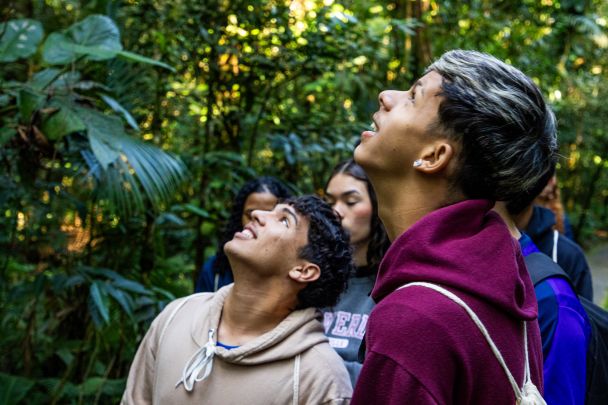
In the proposed activities, the biome ceases to be a mere backdrop and becomes a living classroom. The student does not just learn to admire the forest, but to understand it as a foundation of their own identity, quality of life, and, above all, as a concrete possibility for generating income and a sense of belonging. The concept of “nature production” — which runs throughout the entire pedagogical proposal — helps to convey this: conservation does not need to be an obstacle to development, but can be its very lever.
Teachers as multipliers
The role of schools and, especially, of teachers is central to the success of the project. We understand that these professionals not only transmit content but also serve as emotional and intellectual references within the communities. Therefore, in addition to educating young people, we are training 100 teachers from the state and municipal networks to act as multipliers of the knowledge acquired.
This training is based on the Educator’s Manual for Nature Conservation – Atlantic Forest edition, a teaching material developed by SPVS, and is aligned with the National Common Curricular Base (BNCC), mainly in the subjects of Science, Geography, and Writing. The goal is for the content addressed by the School to be integrated into the regular curriculum, establishing bridges between formal education and the experience lived in the territory.
The expectation is that, through these teachers, more than 400 students will be indirectly impacted, expanding the reach and depth of the actions.
Income, tourism, and youth
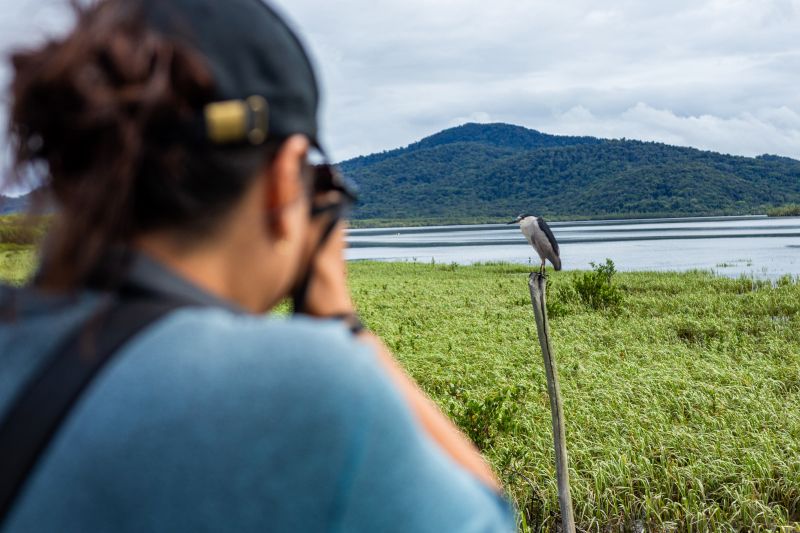
Another important differentiator of this new phase of the project is the direct engagement with nature tourism and the restorative economy. With financial support from GNF, we will offer a comprehensive birdwatching course, providing kits to participants, as well as launching three new ecotourism routes in the region.
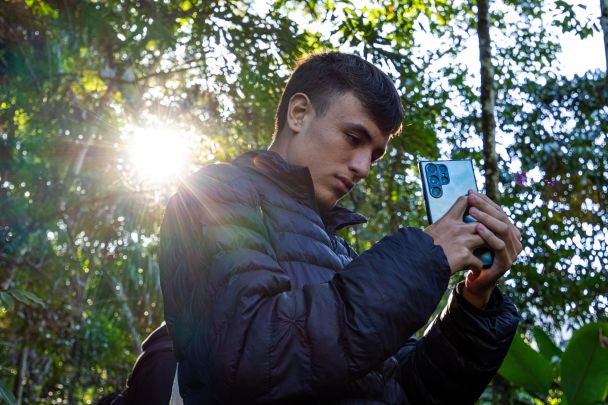
This strategy aims to prepare young people and local entrepreneurs to sustainably explore the enormous potential of the Great Atlantic Forest Reserve — the largest continuous stretch of forest in the biome, covering the states of Paraná, São Paulo, and Santa Catarina. The goal is for the territory to stop being just a starting point for those who migrate in search of opportunities and to become, in fact, a viable development destination.
In this same spirit, five scholarship students will be selected, based on academic merit and engagement, to work as interns in protected areas. Their activities will include field monitoring, gathering local insights, assisting in the creation of tourist itineraries, and producing communication content — all under the guidance of the SPVS technical team.
Networks, belonging, and legacy
The formation of local actor networks is a cross-cutting axis of the initiative. Throughout the project, young people, teachers, entrepreneurs, public managers, and community leaders will be invited to engage in dialogue with each other. We plan to hold a large intersectoral meeting at the end of the cycle, with the aim of discussing the challenges and opportunities of the region and promoting the joint development of proposals for public policies on conservation and sustainable development.
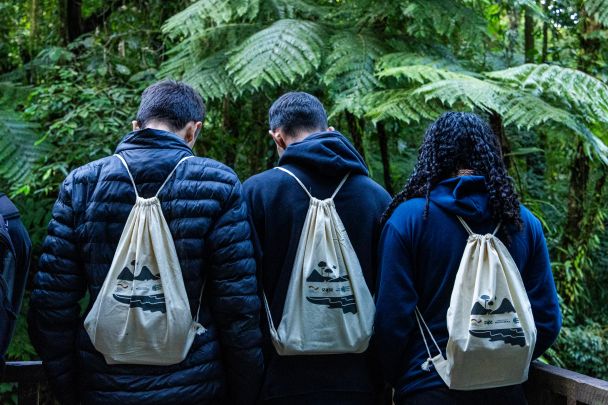
Beyond the numbers and goals, the true legacy of the project lies in transforming perspectives. The experience accumulated by SPVS over the past editions of the School shows that when a young person comes to understand the biodiversity of their surroundings, they reclaim the pride of belonging to that place. And when they discover that they can live from the standing forest, they choose to stay, invest, and create.
The Atlantic Forest will not be conserved by fences, fines, or decrees alone. It will be protected, above all, by the conscious actions of those who live in it, work in it, and dream in it. And this is built through listening, dialogue, and quality education.
The Great Atlantic Forest Reserve can — and should — take the leading role it deserves in the national and international nature tourism scene. But this leadership will only be fair and lasting if it is shared with those who have historically been marginalized: the communities that bring the forest to life.
This is what we are working for. And this is why training young guardians of nature is, more than an educational strategy, an act of hope.
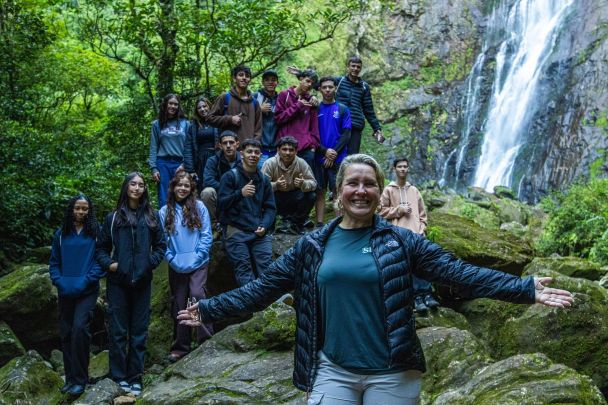
Written by Solange Latenek, Coordinator of SPVS’s conservation education projects.