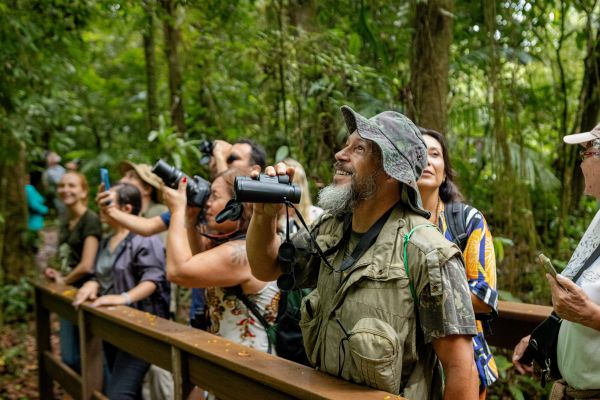
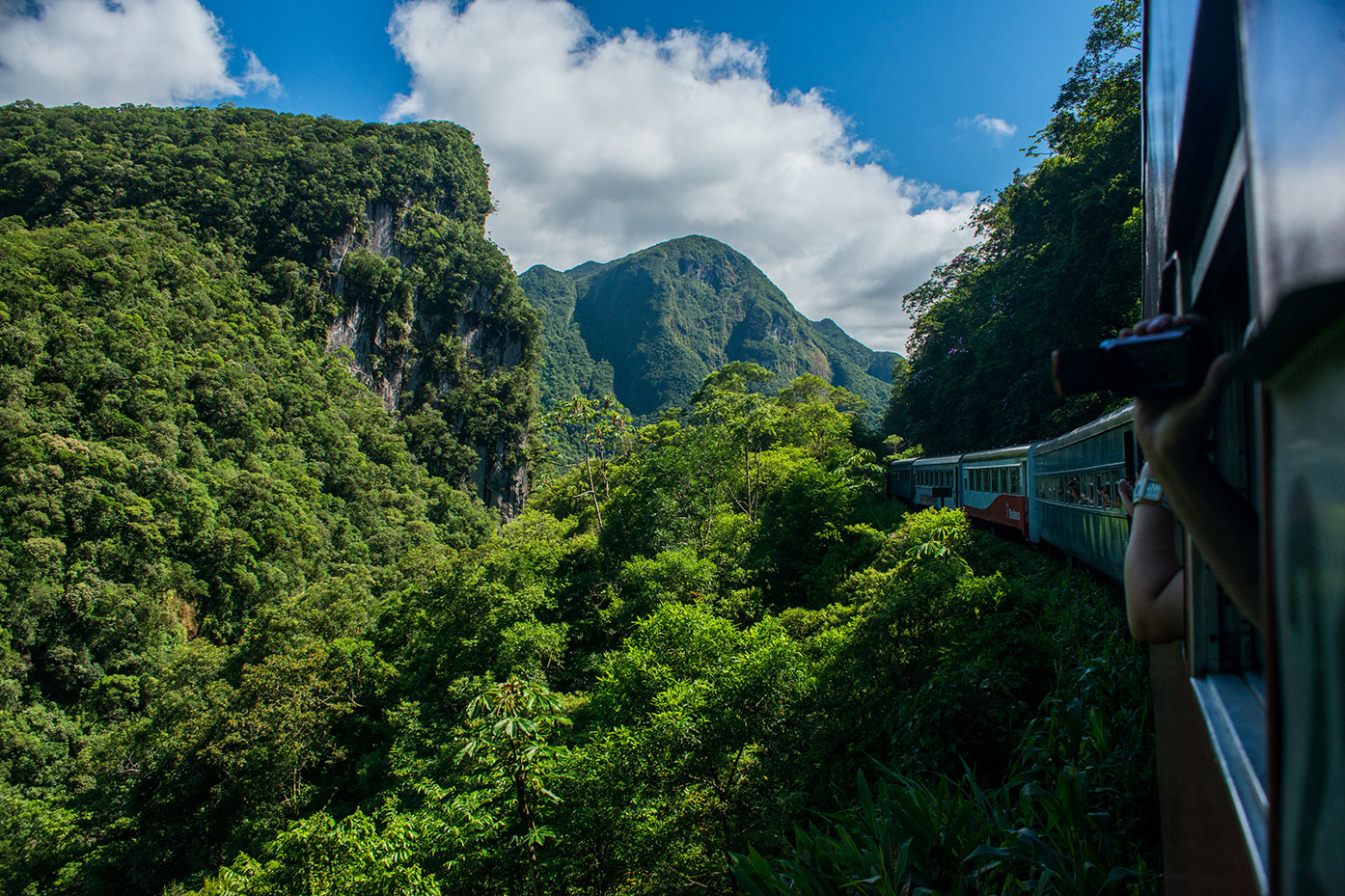
Brazil has enormous potential for nature tourism. This activity could contribute a significant portion of the country’s GDP, promoting development in a positive and responsible manner.
Imagine having the opportunity to visit a tropical forest, stand shoulder to shoulder with ancient trees, swim alongside dolphins, see primate species up close, or even encounter brightly colored birds worthy of the best photography lenses. Or even discover new cultures, experience traditional ways of life, discover new flavors, and learn from your hosts. Enjoy a unique experience that transports you to another universe.
Experiences like these encourage many Brazilians to travel to various corners of the world, from Costa Rica to Indonesia, from Kenya to Canada. In Brazil, some of the best-known destinations are undoubtedly the Amazon, a gigantic rainforest with countless attractions, and the equally blessed Pantanal. But what goes unnoticed by many of these travelers is that, in a country as privileged as Brazil, with unparalleled natural and cultural wealth, these experiences may be much closer than we think.
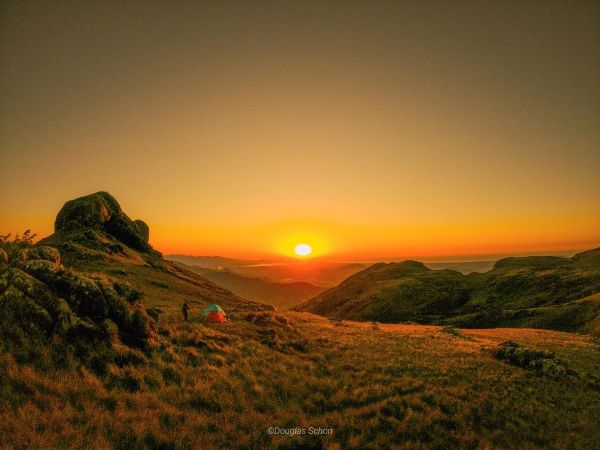
In Brazil, over 70% of the population has the privilege of living within one of the most biodiverse biomes in the world, the Atlantic Forest. A tropical environment connected to the ocean, it stretches along the entire Brazilian coast and many kilometers inland. This provides a tremendous diversity of landscapes, from forests, fields, mountains, bays, sandbanks, mangroves, and islands. Naturally, it’s no surprise that each of these places offers a new source of fascination. They are, in fact, very distinct, each inhabited by a distinct composition of plants and animals, each painting a scene worthy of the most precious works of art.
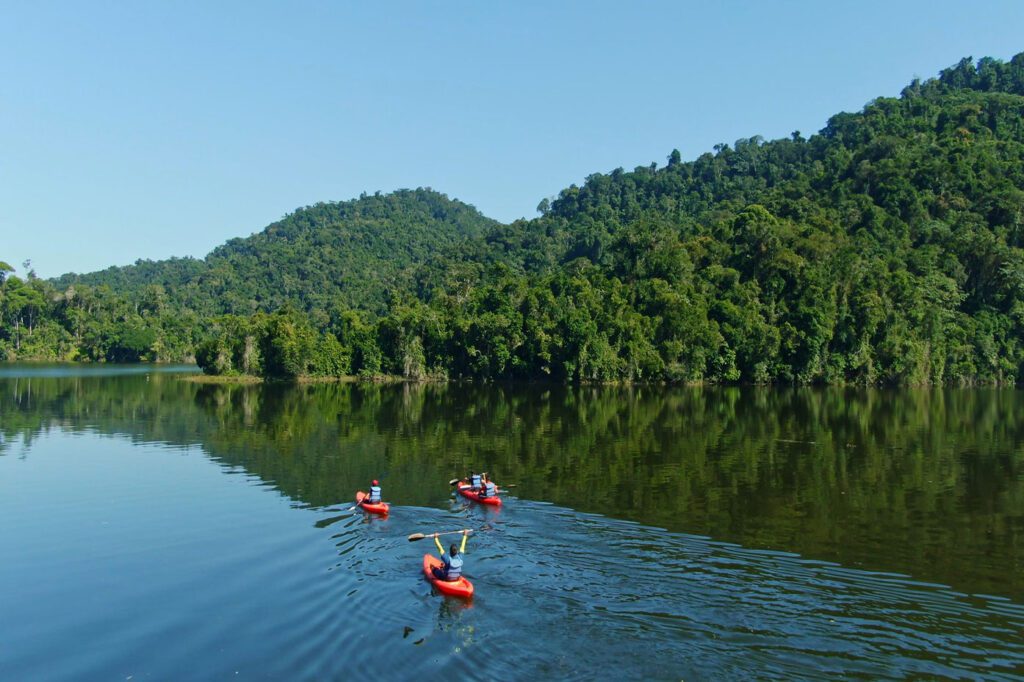 Great Atlantic Forest Reserve. Photo: Gabriel Marchi
The Atlantic Forest is truly one of the most remarkable environments in the world, and it’s ours! Yet, it remains largely unknown to most Brazilians. It’s no wonder we’ve long used much of this forest and its riches as an export product. Perhaps we sold it too cheaply. As a result, most people today live in what was once the Atlantic Forest, but which has long since lost its essence.
Unusually, it was precisely between some of Brazil’s largest cities—São Paulo, Curitiba, and Joinville—that the world’s largest continuous Atlantic Forest remained vibrant and splendid. Covering nearly three million hectares and shared by 60 municipalities, this is the Great Atlantic Forest Reserve, a place that still offers us the opportunity to explore and reconnect with what was once the entire Brazilian coast.
And those who keep this paradise alive are the residents themselves, guardians of ancestral cultures and knowledge that are increasingly scarce in our society. These communities tell much of our country’s history, including indigenous communities, quilombolas, caiçaras, and riverside communities, each deeply connected to their territory and finding in this environment the source of their traditional dishes, legends, and knowledge.
It’s worth remembering that the ideal way to visit special places like these is by adopting a more sustainable tourism approach. Ecotourism, at its core, seeks activities that generate a greater positive than negative impact on a destination. This combination ensures that not only we, but future generations, will have the opportunity to enjoy this heritage. Conveniently, this is also the most profitable alternative for those who receive these visitors, as their business is guaranteed as long as there are people interested in exploring these beauties. Examples like these make the pursuit of truly sustainable practices more tangible.
The pandemic seems to be behind us, but our need to disconnect from our busy routines and reconnect with nature is still a reality, and it’s here to stay. Exploring nature means taking care of our own health and well-being. Furthermore, when we travel, we seek personal satisfaction, which is even greater when we know our visit is contributing to the protection of these places and generating income and jobs for their residents.
Atlantic Forest is here
It’s also becoming increasingly clear that domestic tourism is the new trend. In this case, the Great Atlantic Forest Reserve offers an option that eliminates expensive ticket purchases and can be reached by car or boat, as access is generally better than in other similar regions.
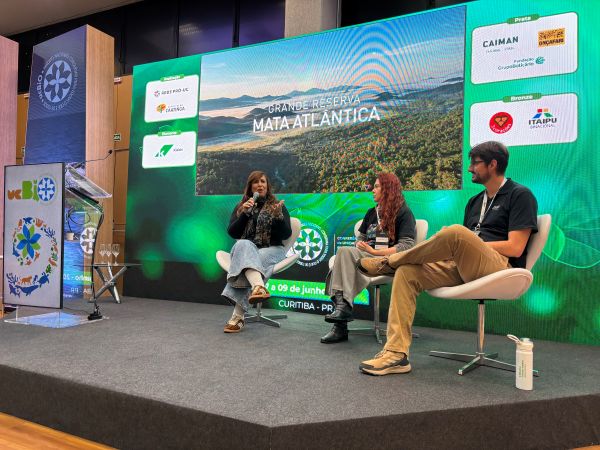
Have you ever thought about finally visiting the Atlantic Forest this year? Winter is approaching, and many tropical forest activities are ideal for this time of year, such as mountaineering, hiking, wildlife watching, boat tours, and more. And if, in addition to exploring, you also want to help preserve this region and promote local culture, the Grande Reserva Mata Atlântica can help you on this adventure. Simply visit our website or social media to learn about the packages offered by our partners and the businesses associated with our network that help build and strengthen this entire region.
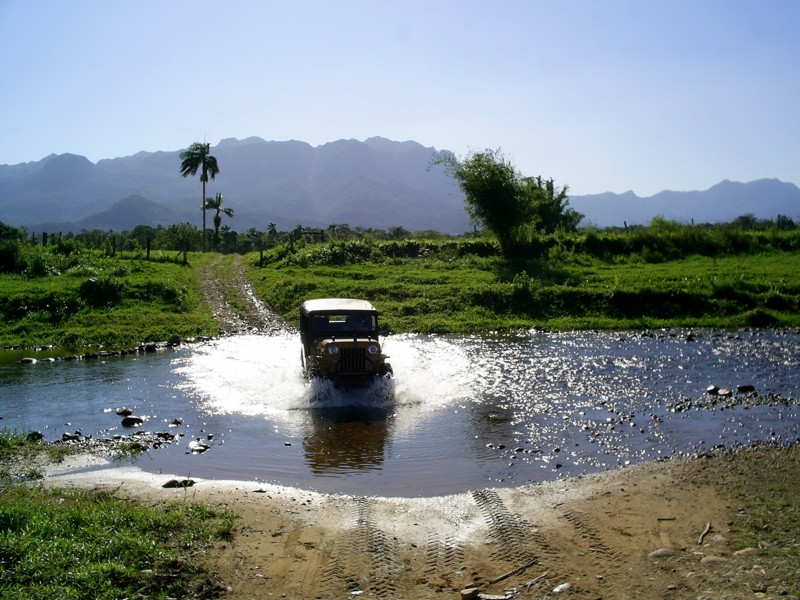 Great Atlantic Forest Reserve. Photo: Priscila Forone
The list of possible itineraries is surprisingly extensive. How about coming to Paraná and visiting Ekôa Park in Morretes, a space that offers visitors an unparalleled immersion in nature, located on the scenic Graciosa Road, one of the most beautiful in Brazil? Or head to Santa Catarina, to a municipality like Schroeder, which exudes German culture and offers a diverse menu of attractions and activities, including the beautiful Estrada Rio do Júlio. Or head to São Paulo and explore the incredible Ribeira Valley, which offers state parks with infrastructure far above the national average and is an ideal location for community-based tourism, such as Ilha do Cardoso in Cananéia, for example.
The formula for promoting progress by sustainably and sustainably utilizing our most valuable resources is nothing new and already works in many parts of the world. Brazil seems yet to awaken to its enormous potential for nature tourism. This activity could be contributing a significant portion of the national GDP, fostering development in a positive and responsible manner, and also serving as an important international showcase for our country. Of course, challenges like these can’t be solved overnight, but we can start by doing our homework. We need to know, then love, and be proud of what is ours.
Fonte: OECO